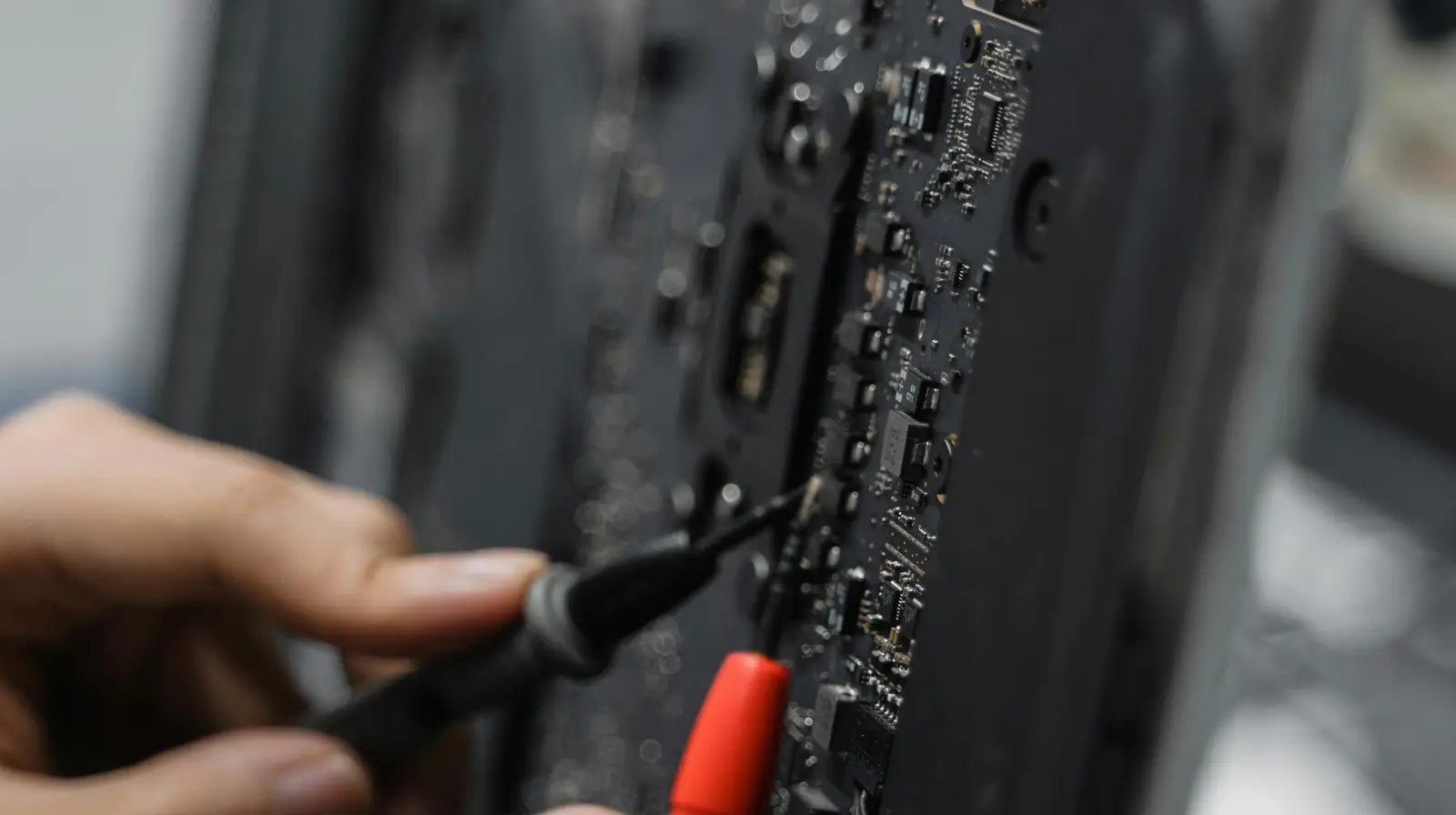
In semiconductor manufacturing, everyone talks about technology. Faster machines. More precise processes. Smaller and smaller structures. But when a production line stops, in most cases the technology itself is not the problem. The supplier is. A poorly selected semiconductor supplier is not just a source of components - it is a potential production risk.

A modern chip is not the result of a single technology.
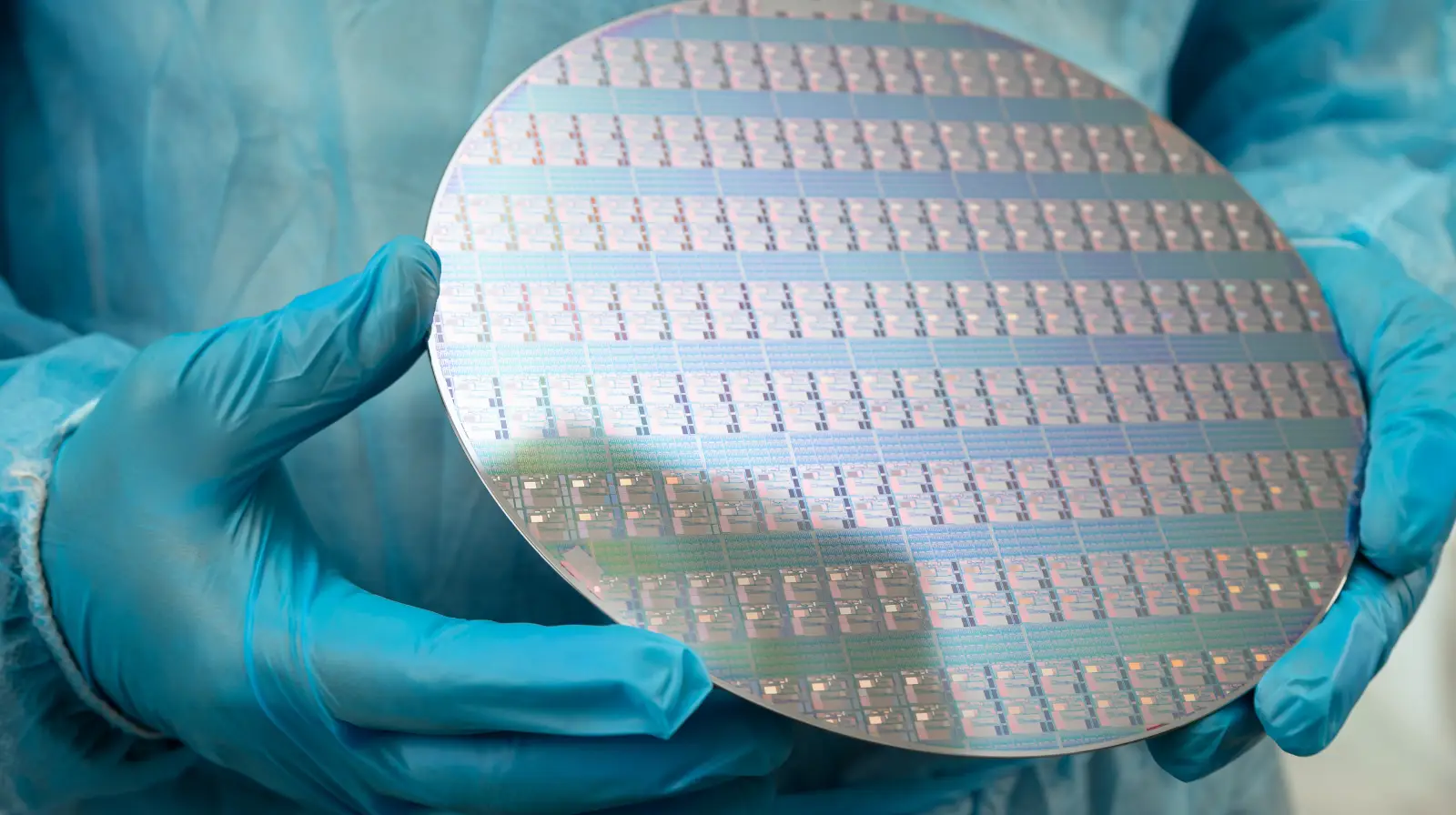
It requires the cooperation of more than 100 different materials, components, and partners. This complex network forms the foundation of the semiconductor supply chain.
And the more complex the system becomes, the more sensitive it is.
A single missing element can stop the entire process.
Over the past years, industrial supply chains have been continuously optimized for speed, cost, and efficiency.
The result is a highly efficient (but highly vulnerable) system.
In the semiconductor industry, a small number of companies often dominate the market for critical components. In many areas, there are virtually no real alternatives available.
This is one of the biggest supply chain risks the industry faces today.

The chip shortage period revealed one thing very clearly:
The issue was not missing technology.
It was the lack of the right industrial supplier.
Production lines around the world were forced to stop because critical components did not arrive on time. This was not a local issue - it had a global impact.
From this perspective, the role of the supplier takes on an entirely new meaning.
In this environment, the question is no longer whether a supplier can deliver.
The real question is how stable a part of the system they are.
A reliable semiconductor supplier:
This is what truly reduces manufacturing and supply chain risks.
The consequences rarely appear immediately.
Instead, they emerge as a chain reaction.
First come small delays. Then unstable production. Eventually, complete operational uncertainty.
At that point, the semiconductor supply chain no longer supports production — it limits it.
In this environment, BIBUS Kft. acts as more than just a supplier.
The focus is on stable, validated manufacturing partners and system-level thinking. Application support also plays a key role, which is especially important in complex industrial environments.
This approach ensures that the supplier is not a source of risk - but part of stable operation.
In semiconductor manufacturing, supplier selection is not an operational decision.
Choosing the right semiconductor supplier determines:
The semiconductor supply chain is not a background process — it is one of the industry’s most important competitive advantages.
Semiconductor industry insights (McKinsey)
Quantifying the semiconductor supply chain (McKinsey)
Semiconductors have a big opportunity—but barriers remain (McKinsey)
Strategies to lead in the semiconductor world (McKinsey)
Semiconductor procurement and supply challenges (McKinsey)
Emerging resilience in the semiconductor supply chain (BCG / SIA)
Industrial automation is entering a new era. With the rise of Industry 5.0 and Physical AI, machines no longer just execute tasks – they adapt, learn, and collaborate with humans. But what does this mean in practice for manufacturers and machine builders? In this article, we explore the key changes and how to prepare for the next level of automation.
Industrial automation is no longer about implementing individual technologies, but about how these technologies fit together into a cohesive, future-proof system. The parallel evolution of artificial intelligence, IIoT, digital twins, and robotics is fundamentally reshaping manufacturing environments.
Industrial electrification is no longer a future concept but a defining factor of today’s industry. Companies that invest in efficient, electrified systems now are not only optimizing performance and sustainability, but also securing a clear competitive advantage for the near future.
Industrial development is entering a new era: modular drive systems and platform-based thinking are fundamentally transforming how modern machines are built. By relying on intelligent, scalable foundations, a wide range of applications—from mobile machinery to robotics—can now be developed faster, more flexibly, and more efficiently. But what does this mean in practice, and why is it becoming one of the key competitive advantages in the industry?