The Regan Vest bunker: how THOMSON technology opens massive doors
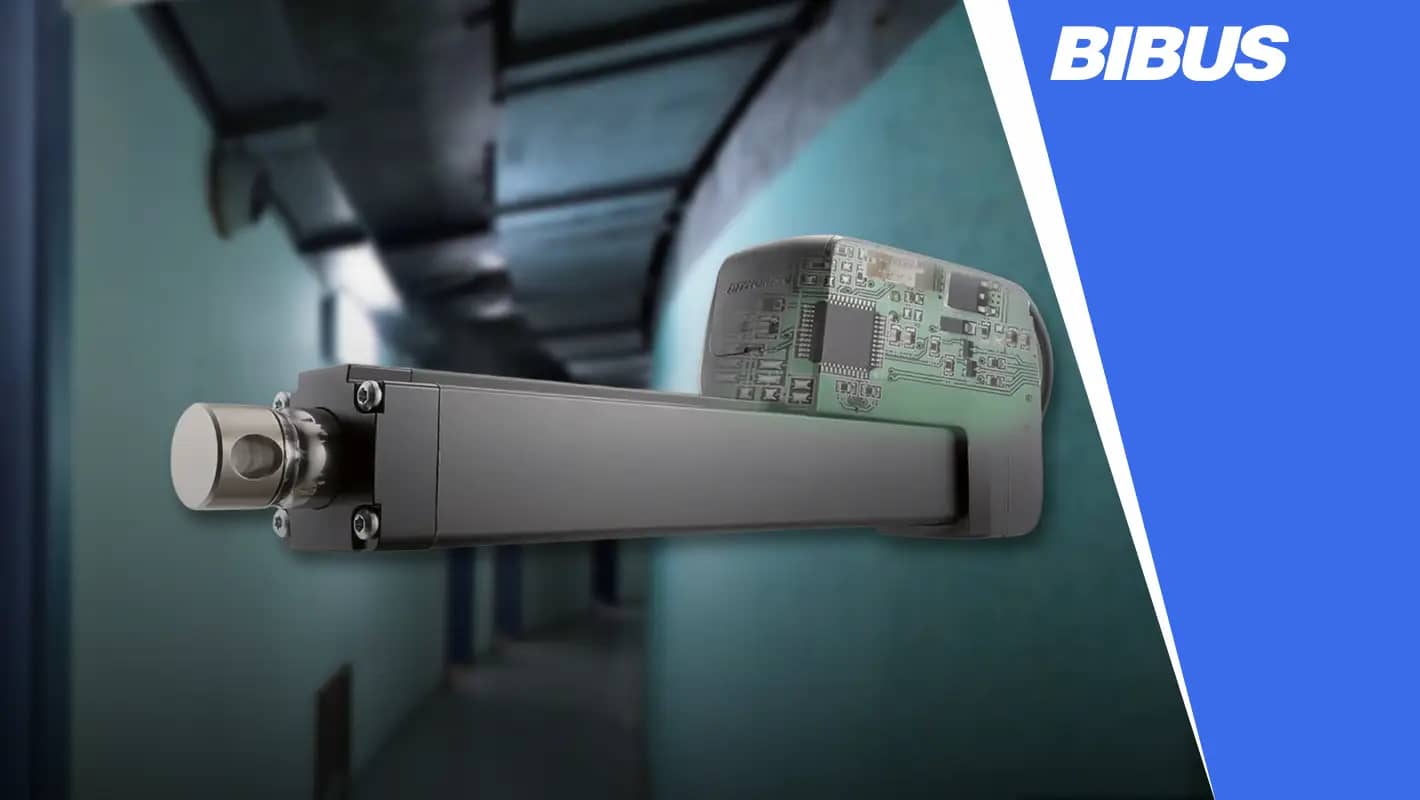
The Regan Vest bunker in Denmark once operated as a secret Cold War facility and today serves as a museum. One of the biggest operational challenges was the daily movement of its multi-ton bunker doors. During the project, the THOMSON Electrak® HD electric linear actuator provided a reliable and simpler alternative to traditional hydraulic systems.
During the Cold War, facilities were built around the world with one purpose in mind: surviving the worst-case scenario. Denmark’s Regan Vest bunker was one of them. For decades, it operated as a classified facility, but today it welcomes visitors as a museum.
Opening the bunker to the public, however, revealed an unexpected engineering challenge: how can doors originally designed for nuclear protection be operated safely and reliably on a daily basis?
The Regan Vest bunker was built in Denmark during the 1960s, in the shadow of Cold War tensions. Its purpose was to ensure the continuity of the Danish government in the event of a nuclear conflict.
The underground complex covered more than 60,000 square feet (~5,574 m²) and was designed to accommodate up to 300 people for extended periods.
For many years, the bunker remained classified. It was declassified only in 2003 and eventually opened as a museum in 2014.
Alongside its historical significance, the facility soon presented a serious operational challenge for modern-day use.
The challenge: turning bunker doors into usable doors
The bunker’s massive doors were far from ordinary industrial gates. Each door weighed up to 3 tons and was engineered specifically for nuclear protection.
This meant the doors were built to withstand extreme conditions — not to be opened and closed multiple times a day for museum visitors.
Traditional door automation systems were simply not practical at this scale. Solutions of this size typically require complex hydraulic or pneumatic systems that are more expensive, more difficult to maintain and mechanically more complicated.
The goal was therefore to find a solution that was robust, reliable and easy to integrate.
The solution: THOMSON Electrak® HD actuator
The solution ultimately came in the form of a THOMSON Electrak® HD electric linear actuator, capable of handling the extreme size and load of the bunker doors.
The Electrak® HD proved to be an ideal choice for several reasons.
Its high load capacity — up to 16 kN (~2 tons of pushing force) — made it suitable for moving multi-ton doors. Its industrial-grade construction ensured reliable operation even in harsh environments.
The IP69K protection rating also played an important role, providing resistance against dust, water and external environmental impacts.
Another major advantage was the electromechanical operation. There was no need for hydraulics or compressed air, making the overall system cleaner, simpler and easier to maintain.
One of the most interesting lessons from the project was that a single actuator could solve a task that would traditionally require a far more complex system.
How does the system work?
At first glance, the operating principle appears simple, but it relies on precise engineering design.
The actuator was mounted to the bunker wall and connected to the door through a mechanical linkage. In practice, the system functions as an electric “arm” that opens and closes the multi-ton structure with controlled force.
Because the actuator is electrically driven, the system can be controlled precisely while using significantly fewer components than a traditional hydraulic setup.
Main characteristics of the THOMSON Electrak® HD actuator used in the project:
16 kN load capacity
1000 mm stroke length
75 mm/s speed
~2 tons pushing force
IP69K protection
These specifications clearly demonstrate that the actuator was designed not for standard automation tasks, but for heavy-duty industrial applications.
Why did this solution work?
One of the most important lessons of the Regan Vest project is the power of simplicity.
While hydraulic systems are capable of high performance, they often require complex infrastructure including pumps, pipework, valves and continuous maintenance.
In contrast, the electric actuator offered a more compact and integrated solution. Fewer components meant fewer potential failure points and faster installation.
Its robust design also ensured reliable operation in the bunker’s extreme environment.
The project demonstrates how modern electric actuators can now replace complex hydraulic systems in applications that were once considered impossible without them.
When history meets modern engineering
The story of the Regan Vest bunker is both a historical and engineering case study. A Cold War infrastructure gained a new purpose, while modern automation technology enabled safe and reliable daily operation.
The project also highlights how electric linear actuators are no longer limited to conventional industrial applications, but can provide effective solutions even in extreme environments and highly demanding engineering challenges.
BIBUS Kft. – Contact
Discover how we can support your project. From selecting the right actuator to providing expert engineering support and complete motion solutions, our team is here to help you find the solution that best fits your application.
Industrial automation is no longer about implementing individual technologies, but about how these technologies fit together into a cohesive, future-proof system. The parallel evolution of artificial intelligence, IIoT, digital twins, and robotics is fundamentally reshaping manufacturing environments.
Industrial development is entering a new era: modular drive systems and platform-based thinking are fundamentally transforming how modern machines are built. By relying on intelligent, scalable foundations, a wide range of applications—from mobile machinery to robotics—can now be developed faster, more flexibly, and more efficiently. But what does this mean in practice, and why is it becoming one of the key competitive advantages in the industry?
The logic behind industrial investments has changed significantly in recent years. In the past, replacing an aging system with a new machine was often an automatic decision. Today, however, rising energy costs, high investment expenses, and the risk of production downtime force companies to evaluate much more carefully whether a complete replacement is truly necessary.
Industrial electrification is no longer a future concept but a defining factor of today’s industry. Companies that invest in efficient, electrified systems now are not only optimizing performance and sustainability, but also securing a clear competitive advantage for the near future.