Beyond Pneumatics: Where Is Linear Motion Technology Heading?

Linear motion technology is undergoing a significant transformation. Rising energy-efficiency requirements, digitalization, and the growing need for flexible manufacturing are driving the adoption of electric actuators and intelligent motion systems across a wide range of applications. At the same time, pneumatics continues to provide a cost-effective and reliable solution in many industrial environments. This article explores the key trends shaping the future of linear motion technology and explains why hybrid systems may become the winning approach in the years ahead.

Budapest
07/07/2026
8 min
merre tart a lineáris mozgatástechnika?

For decades, pneumatic cylinders have been the default solution for linear motion in industrial automation. Their simplicity, reliability, and low initial cost made them a cornerstone of manufacturing systems across industries.

Today, however, the requirements placed on production equipment are changing rapidly. Manufacturers are expected to improve energy efficiency, increase flexibility, collect more operational data, and adapt faster to changing production demands.

As a result, electric actuators, intelligent motion systems, and hybrid automation concepts are becoming increasingly common. But does this mean the end of pneumatics? Or are we witnessing the next evolution of linear motion technology?

The Quiet Transformation of Linear Motion

The industrial environment has changed significantly over the past decade.

What was once primarily a question of productivity is now also about:

  • Energy efficiency
  • Production flexibility
  • Reduced downtime
  • Data collection and analytics
  • Predictive maintenance
  • Digitalization and Industry 4.0 readiness

While pneumatics remains a highly effective and widely used technology, more and more applications are incorporating electric linear actuators, servo-driven positioning systems, and intelligent motion solutions.

The question is no longer “pneumatic or electric?”

The real question is:

Which technology delivers the greatest value in a specific application?

Az energiahatékonysági elvárások egyre több alkalmazásban az elektromos aktuátorok felé terelik a fejlesztéseket.
Growing energy efficiency requirements are driving more and more applications toward electric actuators.

What Is Driving the Change?

Energy Efficiency

Energy costs have become a major factor in machine design and operational strategy.

Compressed air is one of the most expensive forms of energy used in industrial facilities. The overall efficiency of a pneumatic system is influenced not only by compressor performance but also by pressure losses, leaks, and maintenance conditions throughout the network.

Electric actuators, on the other hand, consume energy only when performing work.

In many applications, this can lead to substantial reductions in energy consumption and operating costs.

The advantages are particularly evident in systems requiring:

  • Long holding periods
  • Variable motion profiles
  • Frequent product changeovers
  • Precise positioning

As energy prices continue to rise, more manufacturers are evaluating pneumatic-to-electric conversion opportunities.

Data-Driven Manufacturing

In the age of Industry 4.0 and AI-enabled production, motion systems are expected to do more than simply move.

Modern manufacturing increasingly relies on operational data for:

  • Process optimization
  • Quality assurance
  • Condition monitoring
  • Predictive maintenance
  • Continuous improvement initiatives

Traditional pneumatic cylinders provide limited process feedback.

Electric actuators, however, can deliver real-time information about:

  • Position
  • Speed
  • Load
  • Current consumption
  • Cycle count
  • Health status
  • Expected service life

This capability makes them particularly attractive for smart factory environments and flexible manufacturing systems.

Labor Shortages and Automation

The global shortage of skilled labor continues to accelerate industrial automation.

Manufacturers are deploying more robots, autonomous systems, and automated production lines than ever before.

These systems often require motion solutions that can deliver:

  • High precision
  • Programmable movements
  • Dynamic positioning
  • Easy integration with control systems

As robot adoption increases, demand for programmable linear motion technology grows alongside it.

A pneumatikus rendszerek továbbra is ideálisak nagy ciklusszámú és egyszerű mozgatási feladatokhoz.
Pneumatic systems continue to be the preferred solution for high-cycle, straightforward motion applications.

What Can Pneumatics Still Do Better?

Despite the growth of electric motion solutions, pneumatics remains the preferred choice in many applications.

Its key strengths include:

  • Simple system architecture
  • High operating speed
  • Low investment cost
  • Exceptional cycle life
  • Robust performance
  • Easy maintenance

Typical applications include:

  • Pick-and-place systems
  • Packaging machinery
  • End-of-stroke movements
  • High-cycle production lines
  • Material handling equipment

In these environments, pneumatic systems often remain the most practical and cost-effective solution.

Why Are Electric Actuators Gaining Popularity?

Electric actuators are not replacing pneumatics because they are universally superior.

They are gaining market share because they provide capabilities that are difficult or impossible to achieve with traditional pneumatic systems.

Precision Positioning

Electric actuators offer highly accurate and repeatable positioning, making them ideal for precision manufacturing processes.

Programmable Motion Profiles

Speed, acceleration, and position can be adjusted through software without mechanical modifications.

Improved Energy Efficiency

Many applications can significantly reduce overall energy consumption by replacing compressed-air-driven motion.

Lower Maintenance Requirements

Electric systems eliminate many common pneumatic maintenance issues, including:

  • Air leaks
  • Compressor maintenance
  • Pressure losses
  • Compressed air infrastructure costs

Easier Automation Integration

Electric actuators can be seamlessly integrated into PLC-based control systems, industrial networks, and smart manufacturing platforms.

A good example is the THOMSON Electrak actuator family, which offers:

  • High load capacity
  • Accurate position control
  • Integrated feedback systems
  • Simplified system integration
  • Advanced condition monitoring capabilities

Selecting the right motion technology depends on application requirements such as force, stroke length, positioning accuracy, environmental conditions, and automation objectives.

BIBUS offers a comprehensive portfolio of electric actuators, industrial linear motion solutions, and advanced motion systems for a wide range of industrial applications.

Explore our actuator portfolio

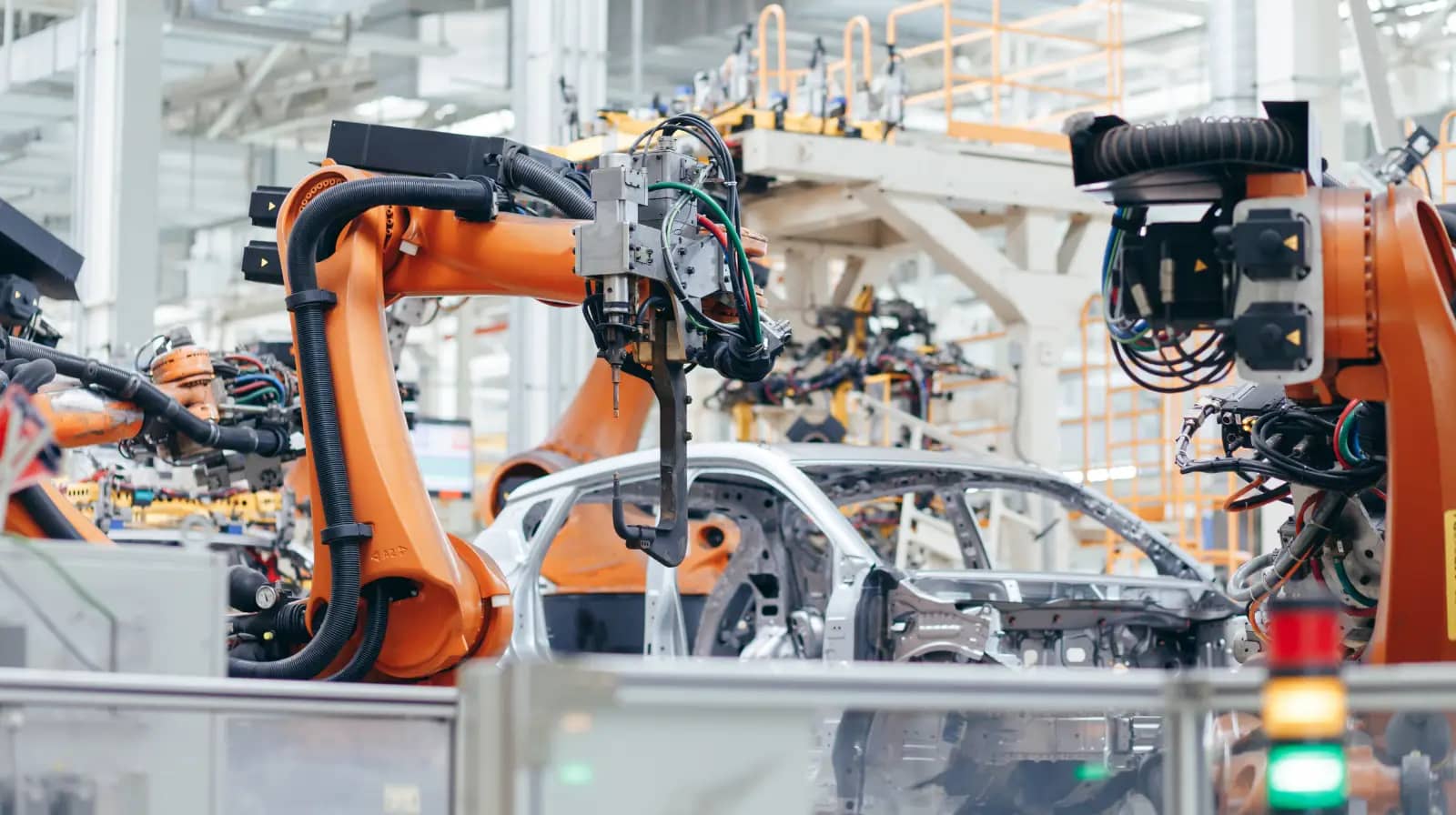
Modern automatizált gyártósor, ahol pneumatikus és elektromos technológiák is jelen vannak.
Modern automated production line featuring both pneumatic and electric motion technologies.

The Next Step: Intelligent Motion Systems

The future of linear motion goes beyond electrification.

Next-generation actuators are becoming intelligent devices capable of much more than movement alone.

Future motion systems will:

  • Communicate with other machines
  • Collect operational data
  • Monitor their own condition
  • Predict maintenance requirements
  • Support AI-driven optimization

Key trends shaping the future include:

  • Smart Actuators
  • Condition Monitoring
  • Predictive Maintenance
  • Motion Analytics
  • Edge Intelligence
  • AI-assisted diagnostics

Motion systems are rapidly becoming active components of the digital factory ecosystem.

We Are Not Seeing the End of Pneumatics: We Are Entering the Hybrid Era

The future of industrial automation is unlikely to belong to a single technology.

Instead, manufacturers are increasingly combining multiple motion technologies within the same machine.

Pneumatics remains ideal for:

  • Fast, repetitive movements
  • Simple positioning tasks
  • Cost-sensitive applications

Electric actuators excel in:

  • Precision positioning
  • Flexible manufacturing
  • Recipe-driven production
  • Data-driven operations

Robotics adds capabilities for:

  • Complex manipulation
  • Adaptive automation
  • Autonomous production processes

The most successful manufacturers will not choose between technologies.

They will choose the right technology for each task.

Where Is Linear Motion Technology Heading?

The evolution of linear motion is not about replacing pneumatics.

It is about enabling manufacturers to:

  • Improve energy efficiency
  • Adapt more quickly to market changes
  • Collect actionable operational data
  • Reduce maintenance costs
  • Increase production flexibility

Organizations that begin evaluating pneumatic, electric, and hybrid solutions today will be better positioned to compete tomorrow.

Choosing the Right Technology

Every application is different.

A packaging machine may benefit most from pneumatic motion, while a precision positioning system may require electric actuators.

The optimal solution depends on factors such as:

  • Positioning accuracy
  • Cycle rate
  • Energy consumption
  • Automation level
  • Maintenance requirements
  • Total cost of ownership

A thorough application assessment is often the key to identifying the most effective long-term solution.

Let's Find the Optimal Solution Together

Not sure whether a pneumatic cylinder, an electric actuator, or a hybrid system is the best choice for your application?

The experts at BIBUS Kft. can help you identify the most suitable linear motion solution based on your technical requirements, operating environment, and automation goals.

Whether you are designing a new machine, upgrading existing equipment, or improving the efficiency of an existing production line, we can support you in selecting the right technology.
Contact us and let’s find the optimal motion solution for your application together.

Explore our actuator portfolio

Kapcsolódó cikkek

BIBUS_2
BIBUS_3
FŐKÉP
Retrofit vs. új beruházás – hogyan döntenek ma az ipari vállalatok?