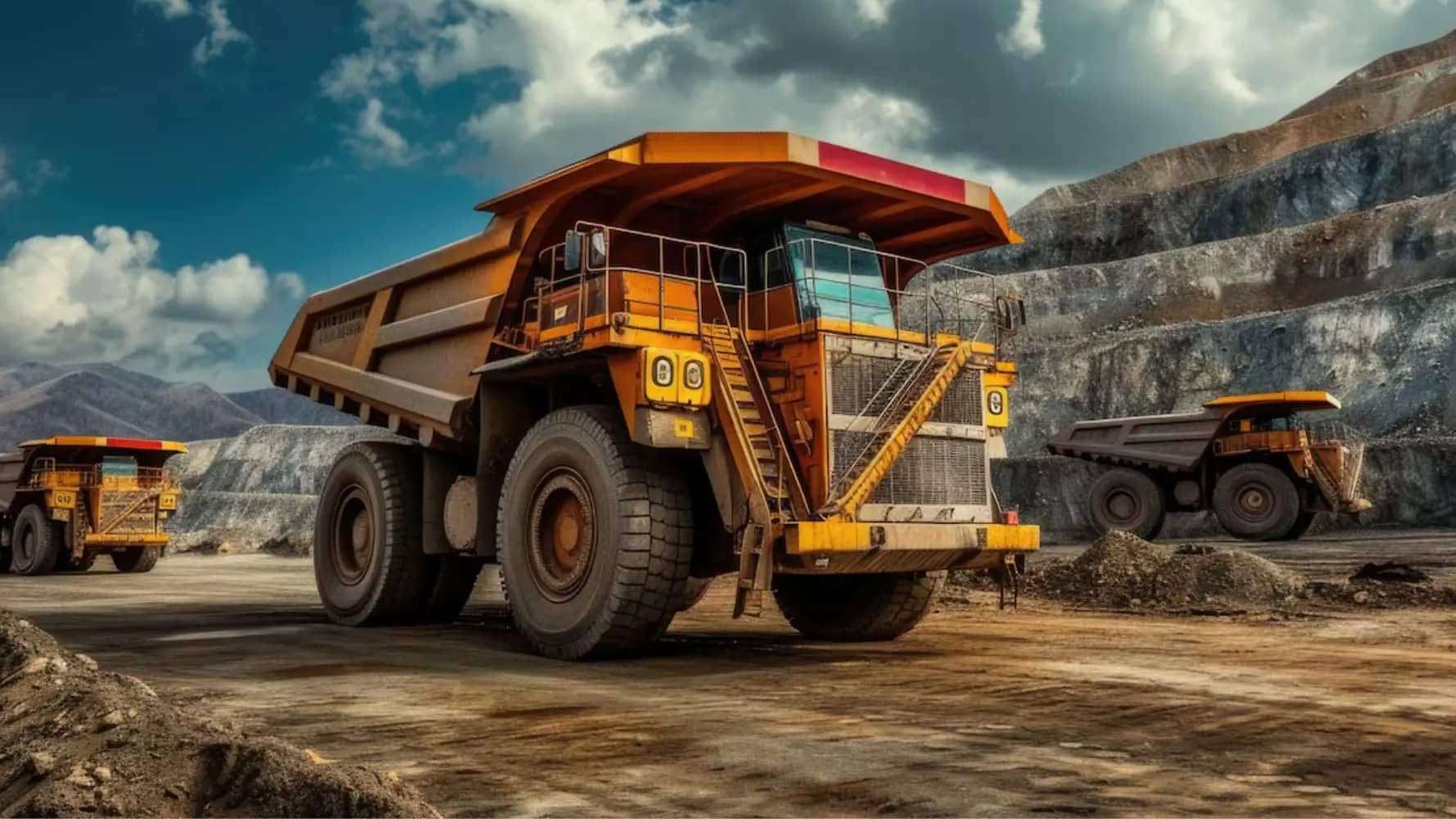
The CEE E-Trans programme "Electric Construction Machinery 2026" (Off Road Construction Machinery) led by ADEME, supports the acquisition, electric retrofit and certain charging infrastructure for construction machinery. The construction site component is open from 30 June to 31 December 2026, subject to the availability of funds. For agricultural machinery, a first session has closed and the Government has announced a second succession by the end of 2026, with the objective of increasing the total budget to 10 million€.

This financial assistance can speed up an investment decision. It does not guarantee the feasibility of the project, nor the performance of the machine once in the field. It is precisely on this technical dimension that BIBUS FRANCE from the feasibility study to the follow-up after commissioning.
E-Trans is a programme financed by energy savings certificates (CEE) and led by ADEME. Initially dedicated to the electrification of heavy road vehicles, it has been extended motorised vehicles used in the construction, public works and agricultural sectors. Its objective is to remove some of the economic obstacles to the adoption of electric solutions, while supporting the infrastructure necessary for their operation.
This evolution responds to several challenges :
The « Electric Construction Machinery 2026" is open from June 30 to December 31 2026.
The Electric Agricultural Machinery component: a second succession is announced
A budget of 10 million euros is allocated to this phase. Applications are examined as they arise, within the limits of available appropriations, and ADEME can close the scheme before maturity if the envelope is exhausted.
Three main categories of projects can be supported :
Important point : The scheme does not finance hybrid solutions. BIBUS France can design electric or hybrid architectures according to industrial needs, but the E-Trans construction site component currently open concerns off-road construction equipment running exclusively on battery electricity.

The first session of the "Electric Agricultural Machinery" component is now closed.
The Electrification Plan presented by the Government plans a second succession by the end of the year 2026.
As of the date of publication of this article, it should be noted that its dates, its final criteria and its procedures for submission have not yet been the subject of an official publication of the ADEME.
To learn more about the uses and technical benefits, see also our article on the electrification of agricultural machinery (link here to the article on AE)
The scheme is aimed at all types of entities : companies, local authorities and other public or private structures, regardless of their size, legal form, mode of governance or financing, as long as they carry out and bear the costs of investments giving rise to the right to a subsidy.
The following are particularly concerned : Buyers of machines, sponsors of a retrofit operation and investors in charging infrastructure.
Companies qualified as "in difficulty" within the meaning of European regulations are not eligible. The allocation of aid is neither automatic nor guaranteed: it depends on the conformity of the project, the quality of the application, the priorities of the scheme and the funds available.
Eligible machinery is new or retrofitted self-propelled non-road mobile machinery, running exclusively on battery electricity and intended for construction site activities. This includes, in particular, uses related to public works, construction, civil engineering, mining and other activities related to the construction environment.
Are not eligible for this stream : vehicles designed primarily for agricultural, logistics, airport or demonstration use, as well as vehicles whose main purpose is not a construction site activity. Forklifts, aerial work platforms and scissor lifts are also excluded, except when they have an off-road configuration that complies with the conditions of the device.
The regulation does not simply require that a vehicle be electric. It imposes several criteria for location within the European Economic Area (EEA).
These criteria are strategic. They reinforce the need for a documented architecture, of identified partners and a clear traceability of technological choices. They also give more weight to players capable of designing, integrating and industrialising solutions in a European ecosystem.
Depending on the nature of the project, the size of the company and its location, the maximum rates can vary from 15 65% for electric vehicles or their retrofit, and 30 to 50% for charging infrastructure.
These rates are ceilings: the basis of calculation and the amount allocated depend on the characteristics of the project and the analysis of the file by ADEME.
→ Consult the official eligibility and funding conditions of the E-Trans programme
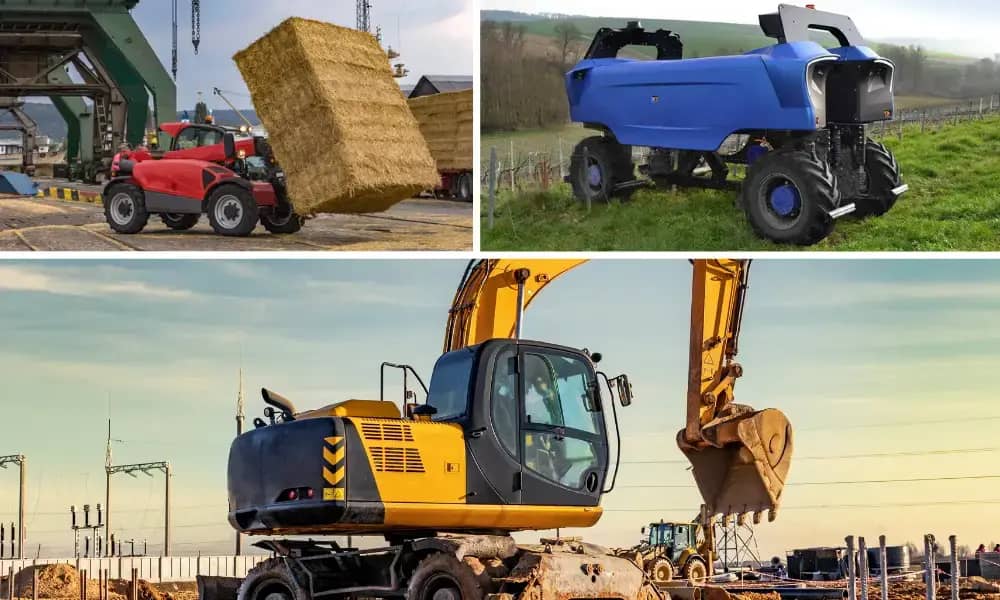
Obtaining financing answers a budgetary question. This does not answer the technical questions that determine whether the machine will really be efficient, reliable and usable in its conditions of use.
Before selecting a motor, battery, controller or converter, it is necessary to understand the real mission of the machine: its work cycles, its power peaks, its torque needs, its useful range, its charging windows, its thermal environment, its integration, safety and maintenance constraints.
A poorly sized project can result in insufficient range, an oversized and expensive battery, charging incompatible with operations or underestimated thermal constraints…
Aid can reduce the investment cost, but it does not correct an ill-defined architecture.
BIBUS France designs and integrates electrification and hybridisation solutions for off-road vehicles. As part of the BIBUS Solutions offer, Its design office supports equipment manufacturers, manufacturers and industrialists in a co-development process.
From feasibility study to integration, prototyping, industrialisation and commissioning, the BIBUS France teams ensure the technical coherence of the project and support its evolution over time.

Not for the construction site currently open. The machines concerned must run exclusively on battery electricity. BIBUS France can support other architectures, in particular hybrids, but they do not fall under this specific system.
Yes, subject to compliance with regulations and program criteria. In this case, the cost of the processing is the basis of eligible costs.
No. The application must be submitted before any legally binding commitment. The quotes requested in the file must be unsigned.
The regulation requires that the final assembly of the machine or the retrofit operation be carried out in the European Economic Area. Other requirements concern the battery pack, the BMS and the manufacturer's R&D.
No. Forklifts, aerial work platforms and scissor lifts are excluded except when they have an off-road configuration that meets the conditions of the device.
No. ADEME remains the sole decision-maker on eligibility and allocation. BIBUS France supports the technical dimension of the project in order to secure its feasibility, design, integration and industrialisation.
Are you developing a new electric vehicle, preparing the retrofit of an existing machine or want to define an electrification architecture adapted to your mission profile ?
EVALUATE MY PROJECT WITH BIBUS FRANCE EXPERTS →
Official sources
ADEME — Electric Construction Machinery 2026, EEC E-Trans Programme
ADEME — Eligibility and financing conditions 2026
ADEME — Electric Agricultural Machinery, first session
Ministry of Ecological Transition — Electrification Plan 2026
The Bibus group electrification department studies, designs, develops and tests complete electrification systems for special vehicles. Our multidisciplinary expertise allows us to offer turnkey solutions perfectly suited to the specific needs of each application.
DMC motor controllers are the brain of electrification systems. BIBUS France offers a complete range of high-performance controllers, perfectly suited to I&W Engineering hub motors and the most demanding industrial applications.
Bibus France electrification solutions transform industrial and agricultural vehicles to meet current environmental challenges. Find out how our electric engine and our integrated "plug & drive" integrated systems can propel your business to a more sustainable and more efficient future.
The electric wheel motors developed by I&W Engineering and distributed by BIBUS France represent a major advancement in the field of special vehicle electrification. Discover how this patented technology is transforming the industry by offering a solution that is 40% more compact.